West Warwick, Rhode Island
Mobile Brake Repair in West Warwick, RI
Driving a car with bad brakes to a shop is the worst option you've got. You're rolling the dice on stopping distance every mile, and the metal-on-metal grind only gets more expensive the longer you wait. Brake work is one of the most common jobs we finish entirely in a driveway — pads, rotors, calipers, and fluid. We bring the parts and the tools to your car, lift it where it sits, and put it back on the road with a pedal you can trust.
Get a Free Quote
Tell us what's going on with the car. We'll call you back with a price.
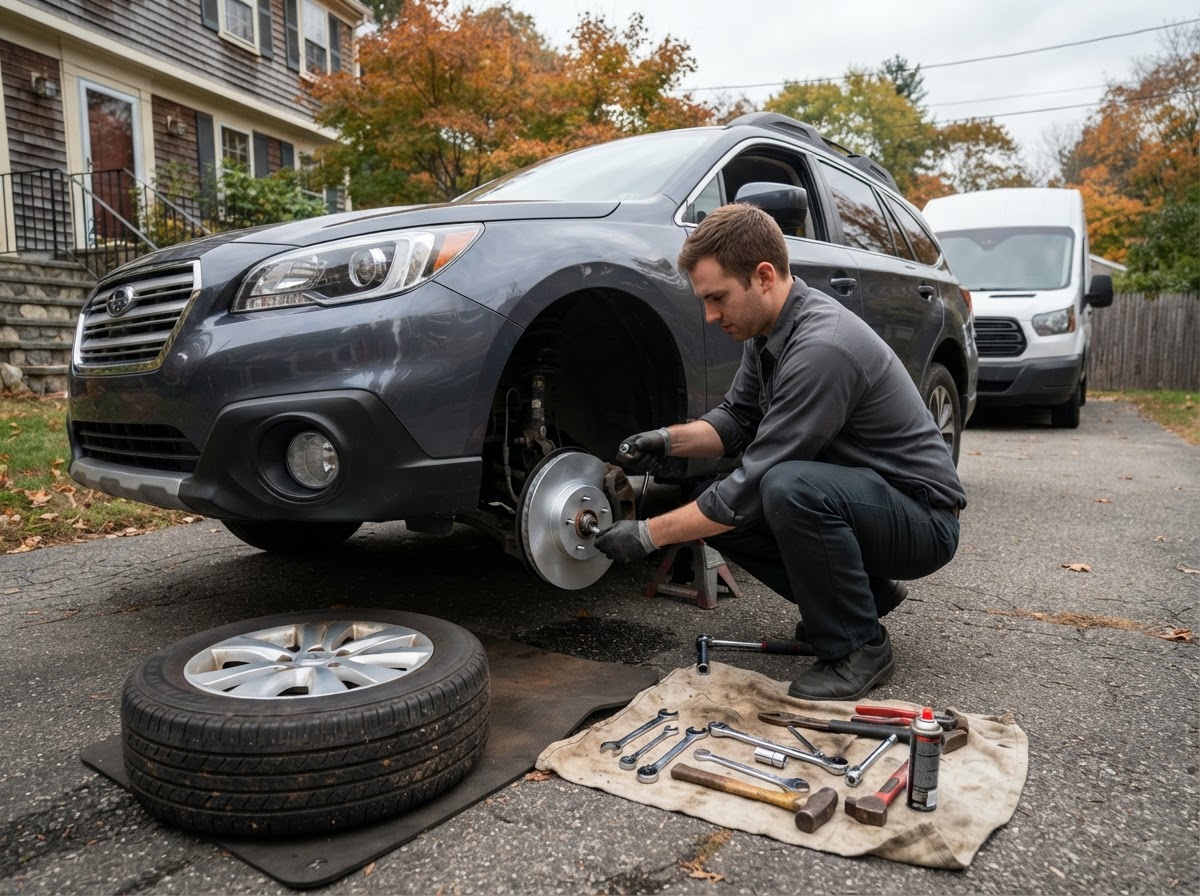
Brake pads, rotors, and calipers replaced right in the driveway — no tow, no shop visit.
Mobile brake repair in West Warwick, RI means a mechanic brings the tools, jack, and parts to the vehicle's location to replace brake pads, rotors, calipers, and flush brake fluid on site — no tow and no shop visit. West Warwick Mobile Mechanic handles brake pad and rotor replacement, caliper replacement, brake fluid flushes, and brake inspections in driveways and parking lots across West Warwick, Warwick, Coventry, East Greenwich, and Cranston. Call 401-586-1696 for mobile brake repair where the car sits.
How it works
How a mobile brake job works
A brake job done in your driveway follows the same steps it would in a shop — we just do it where the car sits, with the same tools and the same parts.
We lift the car safely
We jack the car up and set it on jack stands — the same way a shop does on a lift. We never work under a car supported by a jack alone. The wheel comes off and the brake is exposed.
We measure before we replace
We measure pad and rotor thickness with a gauge and check the rotor surface. If the rotors are still in spec and smooth, we keep them. If they're grooved, warped, or below minimum, we replace them — and we tell you why before we do.
We replace, clean, and lubricate
New pads and rotors go in, the caliper slides get cleaned and lubricated, and the hardware gets inspected and replaced where worn. Every fastener is torqued to spec — not just tightened by feel.
We road-test before we leave
We bed the new pads in with a short road test to make sure the pedal is firm, the car stops straight, and there's no noise. We don't hand you the keys until the brakes feel right.
Why it matters
Why driving to a shop on bad brakes is the worst option
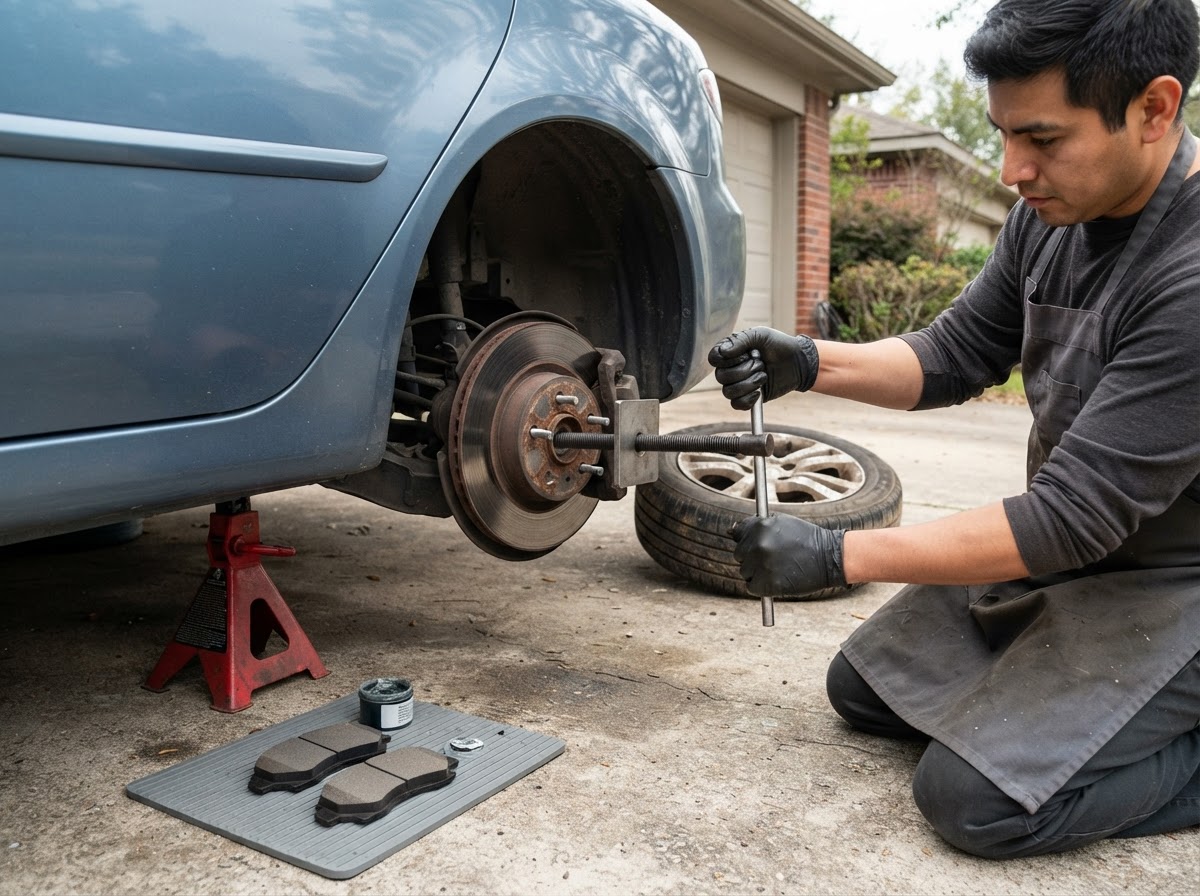
Every mile you drive on worn brakes makes the repair more expensive. A squeal means the pads are low. A grind means the pads are gone and the metal backing is cutting into the rotor — and a scored rotor needs replacing where a smooth one might have been saved. Drive a little further and the heat can warp the rotor, damage the caliper, or extend the stopping distance enough to cause a collision.
That's the core problem with driving a braking car to a shop: you're risking a more expensive repair and a longer stopping distance every mile of the way. A mobile brake job removes that risk entirely. The car stays parked, the work happens on the spot, and you drive it away with brakes you can trust.
What wears out
The parts that cause most brake problems
Brakes are a wear system — every stop removes a little material, and eventually something needs replacing. Here's what fails most often and what each failure feels like.
- Brake pads wear down to the backing plate and squeal, then grind into the rotor — the most common brake job of all.
- Rotors warp from heat and cause a pulsing pedal, or get grooved by worn pads and need replacing with them.
- Calipers seize on their slides or pistons, dragging the brake and overheating one wheel.
- Brake fluid absorbs moisture over years, lowering its boiling point and sinking the pedal feel.
- Brake hoses crack or collapse internally, restricting flow to one corner and causing a pull.
- Hardware — clips, springs, and slides — rusts and seizes, causing uneven pad wear and noise.
Maintenance
How to make a brake job last
Brakes don't last forever, but how you drive and how you maintain them changes the interval a lot. A few habits stretch the life of the parts and keep the pedal firm between services.
- Leave more following distance so you're braking gently instead of hard — aggressive stopping wears pads two to three times faster.
- Have the brake fluid flushed every two to three years, before moisture ruins the feel and rusts the lines from the inside.
- Get the brakes inspected at every tire rotation or oil change so a worn pad is caught before it ruins the rotor.
- Listen for the squeal — most pads have a wear indicator that makes noise before they're gone. Don't wait for the grind.
- Keep the caliper slides clean and lubricated during service so the pads wear evenly and the brake doesn't drag.
What we fix
Four brake jobs we do on site
Pick the one that matches what your car is doing, or call and we'll point you to the right page.
Brake Pad and Rotor Replacement
The most common brake job there is. We lift the car in your driveway, swap the worn pads and scored rotors for new ones, and bed them in so the pedal feels right the first time you stop.
Learn more about brake pad and rotor replacementCaliper Replacement
A seized or leaking caliper drags the brake, cooks the pad, and pulls the car to one side. We replace the bad caliper, bleed that corner, and make sure the parking brake and piston move free.
Learn more about caliper replacementBrake Fluid Flush
Brake fluid pulls in water over the years, which rusts the lines from the inside and sinks the pedal. We flush the whole system fresh, bleed every corner, and restore a firm pedal.
Learn more about brake fluid flushBrake Inspection
Not sure if the noise is the brakes or something else? We pull the wheels, measure the pad and rotor thickness, check the lines and fluid, and tell you straight what it needs — and what it doesn't.
Learn more about brake inspection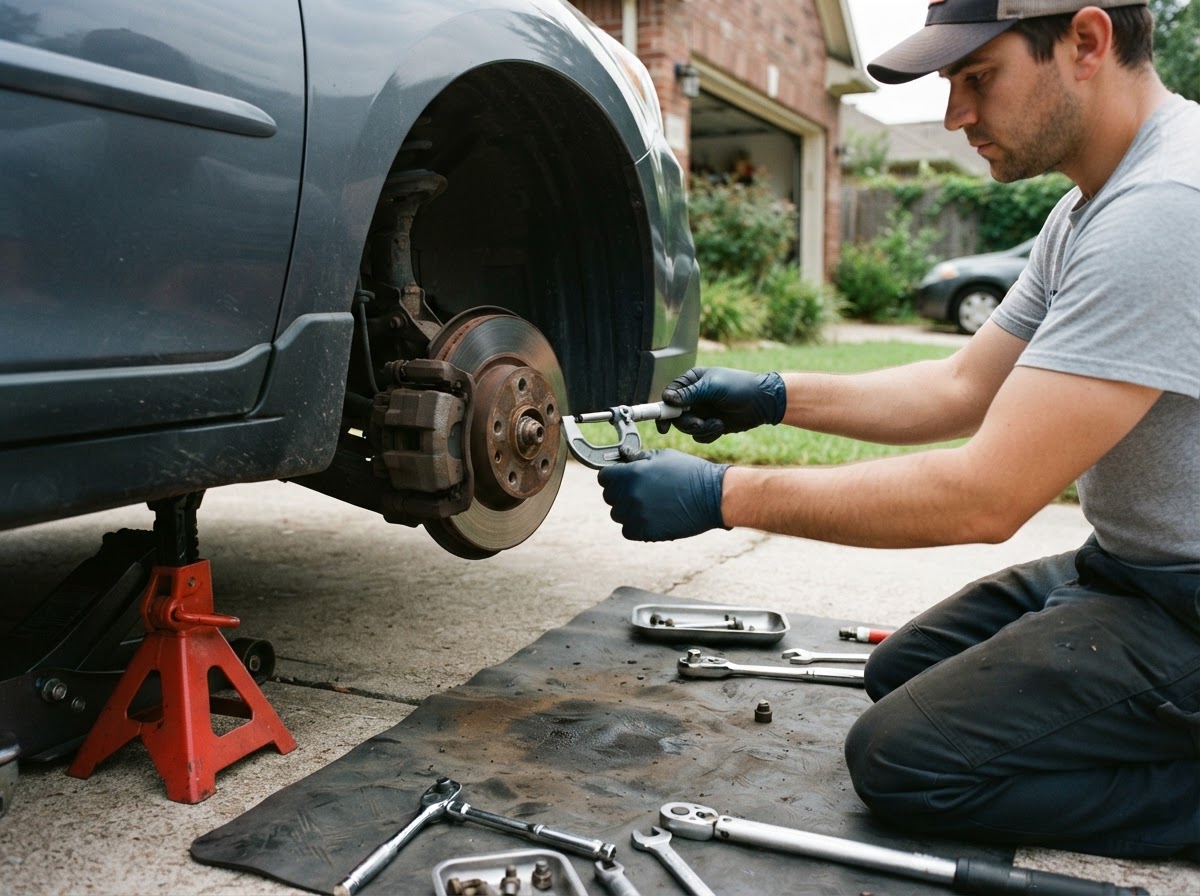
Pads and rotors measured to spec before any part is replaced — done in the driveway, no shop visit.
When to call us
Signs your brakes need attention
If any of these show up, don't put it off — brake problems don't fix themselves, and they don't get cheaper with time.
- Squealing or grinding when you press the brake.
- A pedal that feels soft, spongy, or slowly sinks to the floor.
- Vibration or pulsing through the pedal or the steering wheel when you stop.
- The car pulls to one side when you brake.
- It takes longer to stop than it used to.
- A brake warning light on the dash that stays lit.
Don't drive on bad brakes. Let's fix them where it sits.
Call now and we'll come out, check the brakes, and give you a real price before we turn a single bolt — so you know exactly what you're stopping on.