West Warwick, Rhode Island
Suspension and Steering Repair in West Warwick, RI
Rhode Island roads are hard on suspension — frost heaves, patched pavement, and potholes that swallow a wheel whole. Worn parts start as an annoying clunk or a loose feel in the wheel, and they move from nuisance to safety problem faster than most owners expect. The good news is the shocks, bearings, and joints that take the beating can be replaced where the car sits, no shop visit required.
Get a Free Quote
Tell us what's going on with the car. We'll call you back with a price.
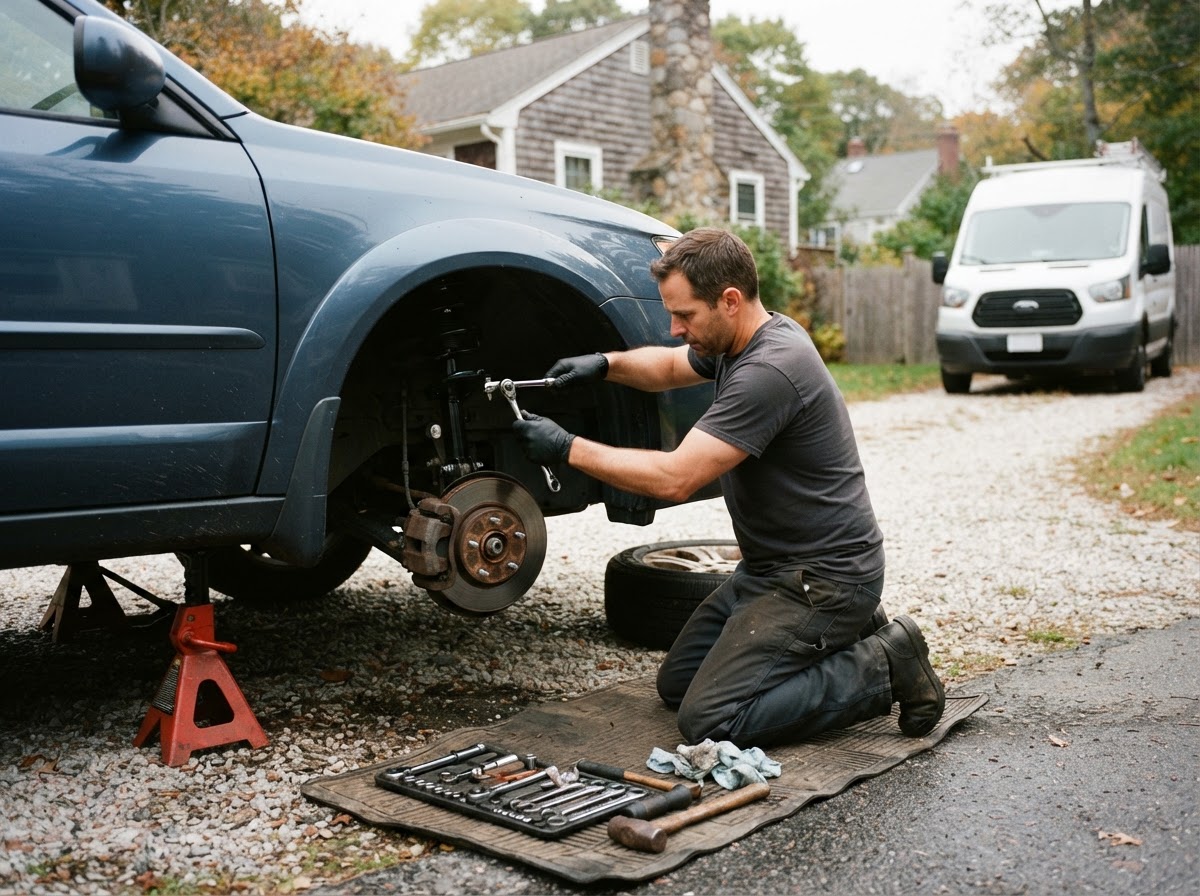
Shocks, struts, bearings, tie rods, and ball joints replaced on site.
Mobile suspension and steering repair in West Warwick, RI means a mechanic brings the jack, stands, and tools to the vehicle's location to replace shocks, struts, wheel bearings, tie rods, and ball joints on site — no tow and no shop visit. West Warwick Mobile Mechanic handles suspension and steering repair in driveways and parking lots across West Warwick, Warwick, Coventry, East Greenwich, and Cranston. Call 401-586-1696 for mobile suspension repair where the car sits.
How it works
How we find the worn part on site
A clunk or a hum can come from a dozen places. We don't guess — we road-test, lift the car, and check each part for play before we quote anything.
We road-test first
We drive the car with you and listen — where the noise happens, when it changes, and what makes it better or worse. A hum that rises with speed points one way; a clunk over bumps points another. The road test narrows it down before we ever lift the car.
We lift it and check for play
With the car safely on jack stands, we rock each wheel, check the tie rods and ball joints with a pry bar, and feel for looseness that shouldn't be there. A worn joint moves; a good one doesn't. We find the play before we quote the part.
We replace the worn part
Once we've confirmed which part is bad, we replace it with a quality part, torque every fastener to spec, and set a rough toe if we touched the steering so the car is safe to drive to an alignment.
Why it matters
Why worn suspension is a safety problem, not just a noise
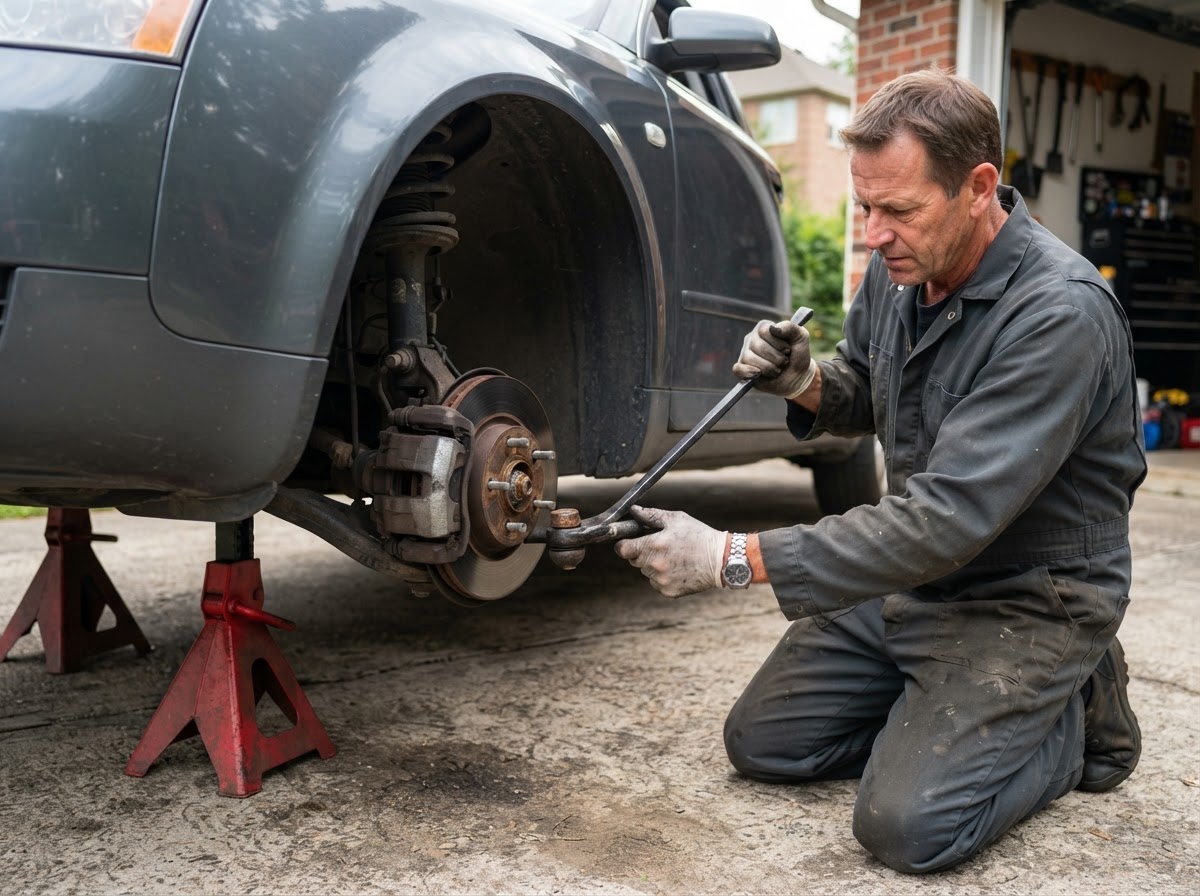
Worn shocks and struts don't just make the ride rough — they stretch your stopping distance, because a car that keeps bouncing after a bump can't keep the tires planted on the pavement. Worn tie rods and ball joints are worse: they're the parts that connect the steering to the wheels, and when one fails the car can stop going where you point it. A bad wheel bearing can overheat, seize, and in the worst case let a wheel come loose.
None of these happen overnight. They wear in slowly enough that you get used to the noise and the loose feel — until the day you need to swerve or stop hard and the car doesn't respond the way it used to. That's the gap between an annoying clunk and a real safety problem, and it closes faster than most owners expect.
Rhode Island winters make it worse. Frost heaves, salt, and potholes accelerate wear on every joint and bearing under the car. If you've been hearing a noise for a few weeks, it's not going to fix itself — and it's not going to get quieter.
What wears out
The parts that take the beating on Rhode Island roads
Suspension wear is cumulative — every frost heave, every pothole, every railroad crossing adds up. Here are the parts that fail most often and why.
- Shocks and struts lose their damping oil and stop controlling the bounce — the car floats and the tires cup.
- Wheel bearings take the brunt of every pothole impact and eventually pit, hum, and loosen.
- Tie rod ends wear at the pivot where steering meets the wheel, creating play and wander.
- Ball joints carry the weight of the front end and wear at the pivot, eventually clunking and loosening.
- Sway bar links snap or wear at their bushings, causing a sharp clunk over every bump.
- Bushings — the rubber cushions at every pivot — dry out, crack, and let metal hit metal.
Repair or replace
When a part can be saved — and when it can't
Most worn suspension parts aren't repairable — a bearing that's pitted can't be smoothed, and a strut that's leaking can't be resealed. The decision is usually which parts to replace, not whether to. But there are a few exceptions worth knowing.
Sway bar links and tie rod ends are cheap and always replaced rather than rebuilt. Bushings can sometimes be pressed out and replaced on their own, saving the control arm — but only if the arm itself isn't bent or rusted. A strut mount can be replaced without replacing the strut if the strut is still good. We inspect the whole assembly and tell you what genuinely needs replacing and what doesn't, so you're not paying for parts that still have life in them.
The one thing we won't do is put a new part next to a worn one on the same axle. That creates an imbalance that makes the car handle unpredictably and wears the new part out faster. If one side is bad, the other side on that axle is usually close behind.
What we fix
Three suspension jobs we do on site
Pick the one that matches the noise or the feel, or call and we'll tell you which corner is actually bad.
Shocks and struts replacement
Worn shocks and struts let the car float and bounce after every bump, and they stretch your stopping distance more than you'd think. We swap them in your driveway so the car settles flat, the tires stop cupping, and the ride stops feeling like a boat.
Learn more about shocks and struts replacementWheel bearing and hub replacement
A growling wheel bearing only gets louder, and a seized one can lock a wheel up at speed. We find which corner is making the noise, press out the old bearing, and install the new hub assembly on site so the noise is gone and the wheel turns free.
Learn more about wheel bearing and hub replacementTie rod and ball joint replacement
Loose tie rods and worn ball joints are what make the steering wander and the tires eat themselves on the inside edge. We find the play, replace the worn joint, and get the front end tight again so the wheel goes where you point it.
Learn more about tie rod and ball joint replacement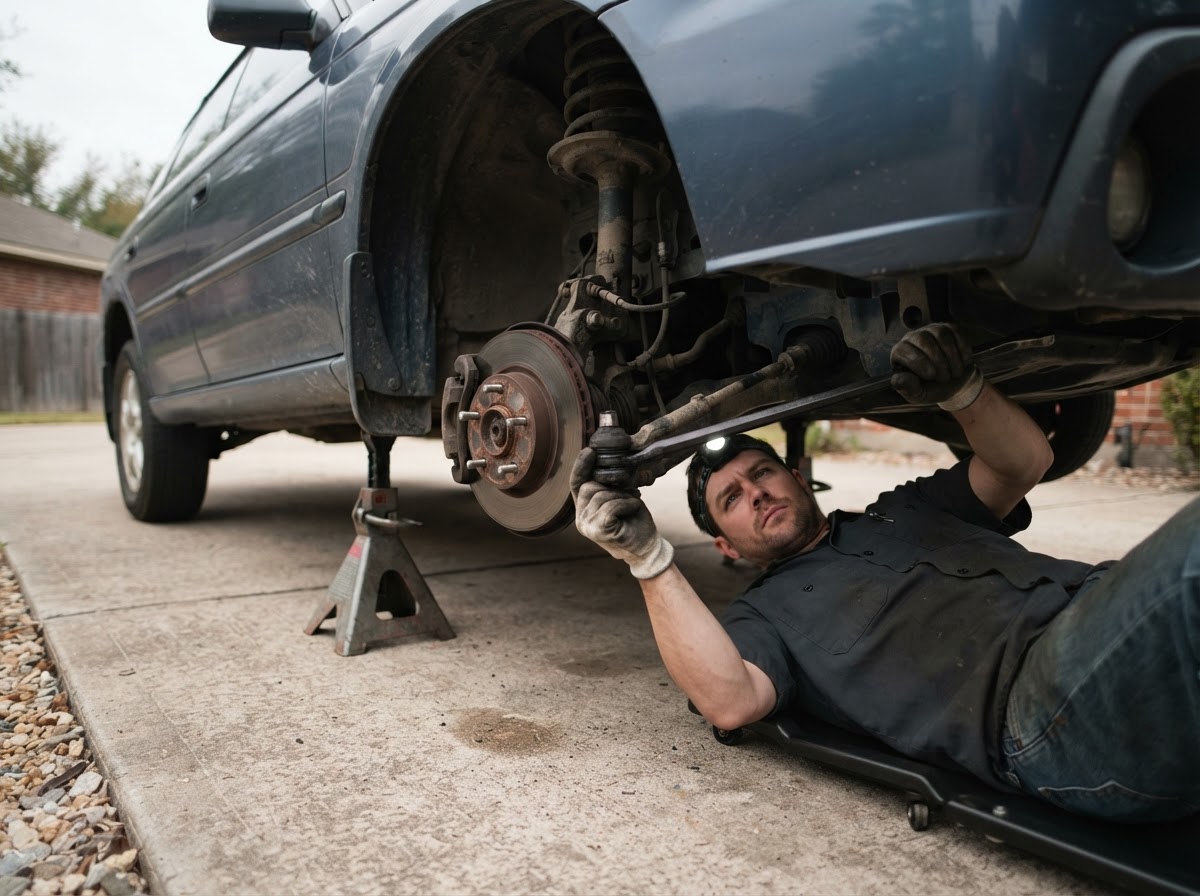
Play, wear, and boot condition checked at every corner — worn parts replaced before they become a safety problem.
When to call us
Signs the suspension is worn
Suspension parts wear slowly enough that you get used to the noise — until you don't. If any of these sound like your car, it's time.
- A clunk or rattle from underneath when you go over bumps.
- A humming or growling noise that rises and falls with your speed.
- The steering feels loose, vague, or like it wanders on its own.
- Uneven or cupped tire wear, especially on the inside edge.
- The front end keeps bouncing two or three times after a bump.
- A vibration you can feel right through the steering wheel.
Stop driving around the noise. Let's find the worn part.
Call now and we'll come out, find what's loose or growling, and give you a real price before we turn a wrench — so the car drives straight and stops safe again.