West Warwick, Rhode Island
Serpentine Belt Replacement in West Warwick, RI
One belt drives the alternator, the water pump, and the power steering — and sometimes the air conditioning compressor too. That's a lot of critical systems riding on a single strip of rubber. When it lets go on the highway, you lose the charging system, the steering goes heavy, and the engine starts overheating in minutes. A belt that's cracking, glazing, or squealing is telling you it's near the end, and it's far cheaper to replace it in your driveway than to replace it on the shoulder after it snaps — to say nothing of the tow and the overheating damage it can cause. We inspect the tensioner too, because a new belt on a worn tensioner just squeals again next month.
Get a Free Quote
Tell us what's going on with the car. We'll call you back with a price.
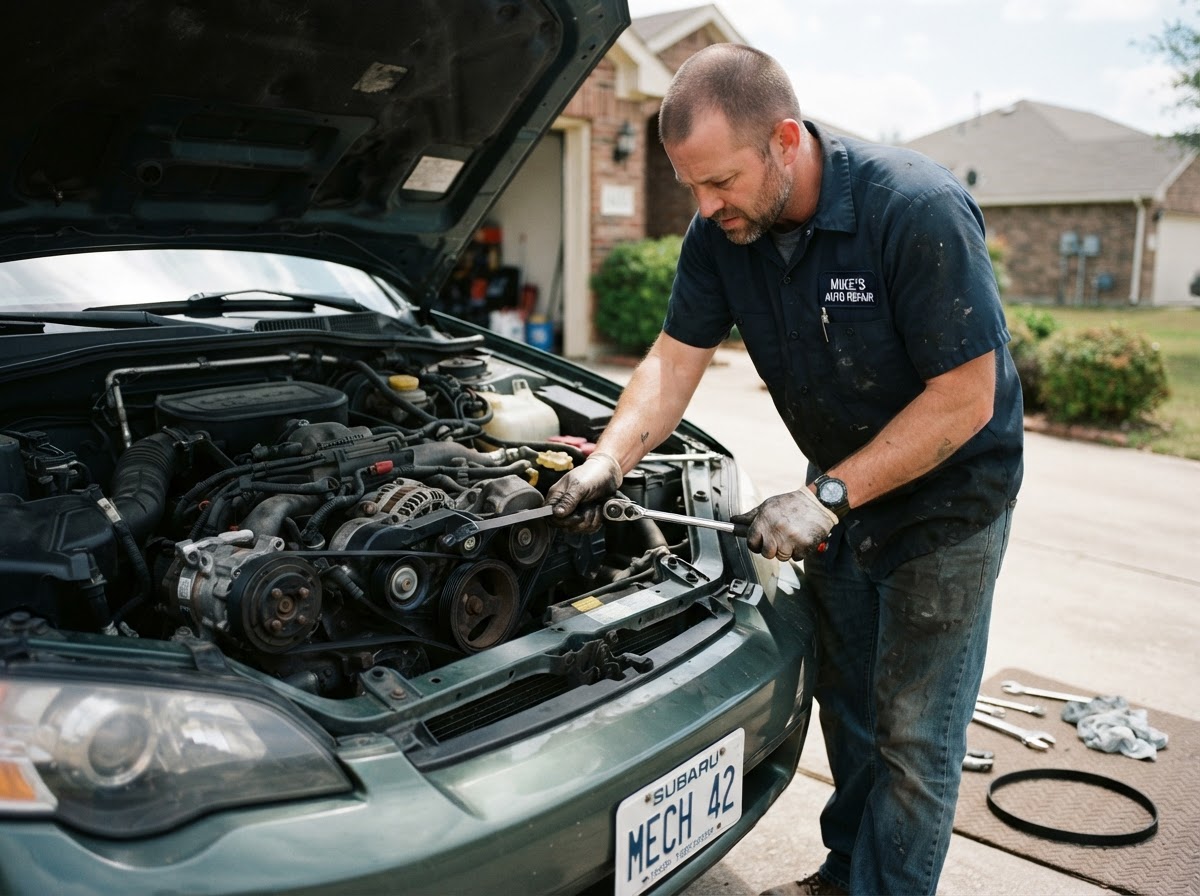
New belt routed right, tensioner checked, and the engine confirmed running true and quiet before we leave.
Signs you need this
When the belt is on its way out
A serpentine belt rarely fails without warning — it squeals, it cracks, it glazes, and the systems it drives start acting up. These are the signs it's due before it snaps.
- A squeal on cold start — that sharp, embarrassing shriek for the first few seconds after the engine catches, which fades as the belt warms up and grips.
- Visible cracks or glazing on the belt, the rubber dried out and shiny on the pulley side, which means it's living on borrowed time.
- The battery light flickering, because a belt slipping on the alternator pulley isn't spinning it fast enough to charge cleanly.
- The steering suddenly going heavy, the power steering pump not being driven because the belt let go or is slipping badly.
- The temperature gauge climbing, the water pump not turning because the belt that drives it has slipped or snapped.
- A chirping that changes with engine speed, a failing bearing in the tensioner or an idler pulley telegraphing through the belt.
What's included
More than a new belt
A proper belt job inspects the whole drive system, not just the rubber. Here's the full job, from reading the old belt to confirming the new one runs true.
- Inspecting the belt for cracks, glazing, and missing ribs — reading what it tells you about how the rest of the system is wearing.
- Inspecting the tensioner and the idler pulleys, because a new belt on a worn tensioner will squeal again in a month and we won't sell you that.
- Replacing the belt with the correct one for your engine, routed the right way around every pulley.
- Checking that the tensioner still holds correctly after the new belt is on — that it keeps the right tension and isn't bottomed out or weak.
- Starting the engine and confirming the belt runs true and quiet before we pack up, not just buttoning it up and leaving.
How long it takes
A realistic range
On most vehicles, a serpentine belt replacement runs 30 to 60 minutes once we're at the car. That covers inspecting the old belt and the tensioner, routing the new one correctly around every pulley, and confirming it runs true and quiet. Some engines tuck the belt behind a motor mount that has to be loosened to slip the belt through, and those take longer. We'll give you a real time estimate on the phone when you call, based on the year, make, and model.
What it costs
What drives the price
We don't publish a dollar figure here, because the price depends on a couple of things we can't know until we hear about your car. First, the belt itself — a standard belt and a heavy-duty or longer-life belt aren't the same part or price. Second, the tensioner and idler pulleys, which we inspect and may recommend replacing at the same time so the new belt actually stays tight. Third, engine access — a belt right up front is quick, one buried behind a motor mount takes longer. What we can promise is a real number before any work starts. The fastest way to that number is a phone call with the year, make, and model.
Driveway-ready
Can this be done in a driveway?
Yes. A serpentine belt replacement needs the hood up, a flat piece of ground, and the right tools — a belt routing diagram, a tensioner release tool, and a socket set. Nothing about it requires a lift. The belt sits at the front of the engine on most vehicles, and even the ones that need a motor mount loosened to thread the belt through are doable on the ground with the right approach. We do the whole job where the car sits and confirm it runs true before we leave.
Related work
Where to go next
A failing belt often points at the systems it drives. Here's the parent category and a couple of related jobs we handle on site.
Squealing belt? Let's replace it before it snaps.
Call now and we'll come out, inspect the belt and tensioner, and route a new one — confirmed running true before we leave.